

Ohio Senate Bill 55 -Operating Under the Influence of Marijuana- Advances in House
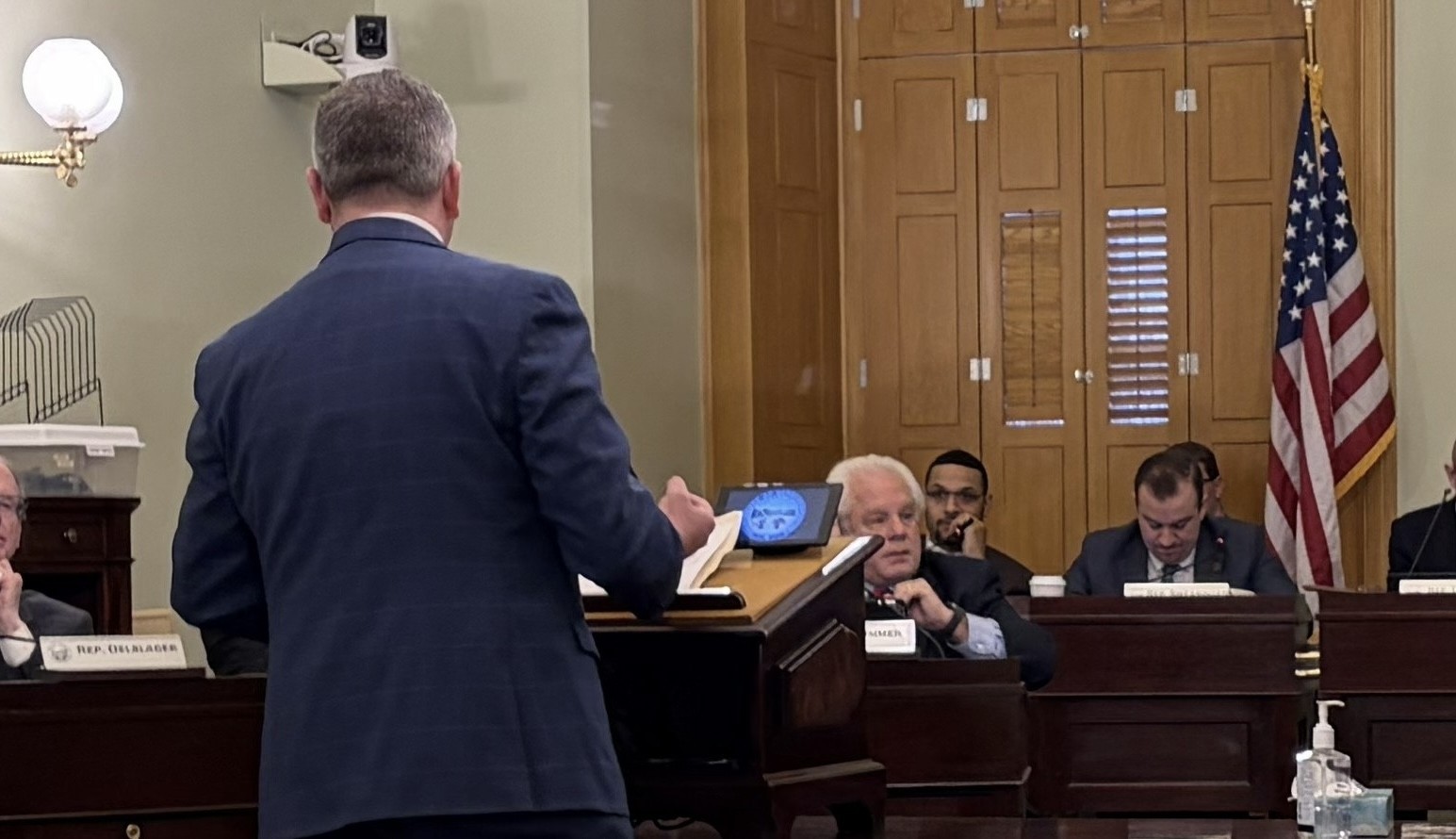
Dominy Law Firm attorney Bryan Hawkins testifying in Ohio House Judiciary Committee hearing
In the committee hearing, proponent testimony was offered by attorney Bryan Hawkins of the Dominy Law Firm in Columbus, Ohio. The Dominy Law Firm is one of Ohio’s leading firms in the area of OVI defense and has expertise in marijuana OVI cases.
Ohio law currently prohibits OVI marijuana in four ways:
• Operating a vehicle under the influence of marijuana
• Operating a vehicle with a prohibited concentration of marijuana in blood or urine
• Operating a vehicle with a prohibited concentration of marijuana metabolite in blood or urine
• Operating a vehicle with a prohibited concentration marijuana metabolite and being under the influence
Senate Bill 55 proposes to reduce the four prohibitions to two: operating a vehicle under the influence of THC, and operating a vehicle with a prohibited concentration of TCH in blood. The prohibited concentration of THC would be increased from two nanograms per milliliter to five nanograms per milliliter. The new law would delete the prohibitions related to operating a vehicle with a prohibited concentration of marijuana metabolite.
In his testimony, attorney Bryan Hawkins commented on the criminalization of driving with marijuana metabolites in one’s body. He stated, “Under our current law, someone who has not consumed marijuana for several weeks could none the less be convicted of driving impaired solely due to the presence of a completely inert waste product found in their blood or urine.”
For a defendant who has a concentration of THC less than five nanograms per milliliter of blood, more than 25 nanograms per milliliter of urine, or more than five nanograms per milliliter of oral fluid, Senate Bill 55 proposes rebuttable inferences. A jury would be permitted to infer the defendant was under the influence of THC, but the defendant would be able to rebut that inference with evidence he or she was not under the influence.
Senate Bill 55 also gives defendants the opportunity to challenge the analysis of blood, urine, and oral fluid. Before trial, a defendant would be permitted to contest the admissibility of the test under the Ohio Rules of Evidence. At trial, a defendant would be permitted to challenge the “method, process, reliability, or equipment” used in the analysis.
Attorney Bryan Hawkins, in his testimony, indicated Senate Bill 55 would be an improvement in Ohio OVI law. He commented, “It is clear that allowing drivers to be convicted of impaired driving solely based on the level of an inactive metabolite of marijuana in their body is patently unfair.” He added, “This compromise position preserves law enforcement officers’ ability to keep impaired drivers off the road while simultaneously allowing defendants the ability to defend themselves and their due process rights once the case makes its way to court.”
This release was submitted by The Dominy Law Firm. The firm represents clients for OVI charges, criminal offenses, and serious vehicular crimes such as Vehicular Homicide and Vehicular Assault. The Dominy Law Firm is listed as a Best Law Firm in America® in the areas of DUI Defense and Criminal Defense.
Shawn Dominy
Dominy Law Firm, LLC
+1 6147171177
email us here
Visit us on social media:
YouTube
Legal Disclaimer:
EIN Presswire provides this news content "as is" without warranty of any kind. We do not accept any responsibility or liability for the accuracy, content, images, videos, licenses, completeness, legality, or reliability of the information contained in this article. If you have any complaints or copyright issues related to this article, kindly contact the author above.
