

Dr. Joseph T. Cruise of Cruise Plastic Surgery Named Castle Connolly Top Doctor for Second Consecutive Year

Cruise Plastic Surgery logo

Dr. Cruise with patient

Dr. Cruise, Newport Beach Plastic Surgeon

Castel Connolly Top Doctor Award 2026
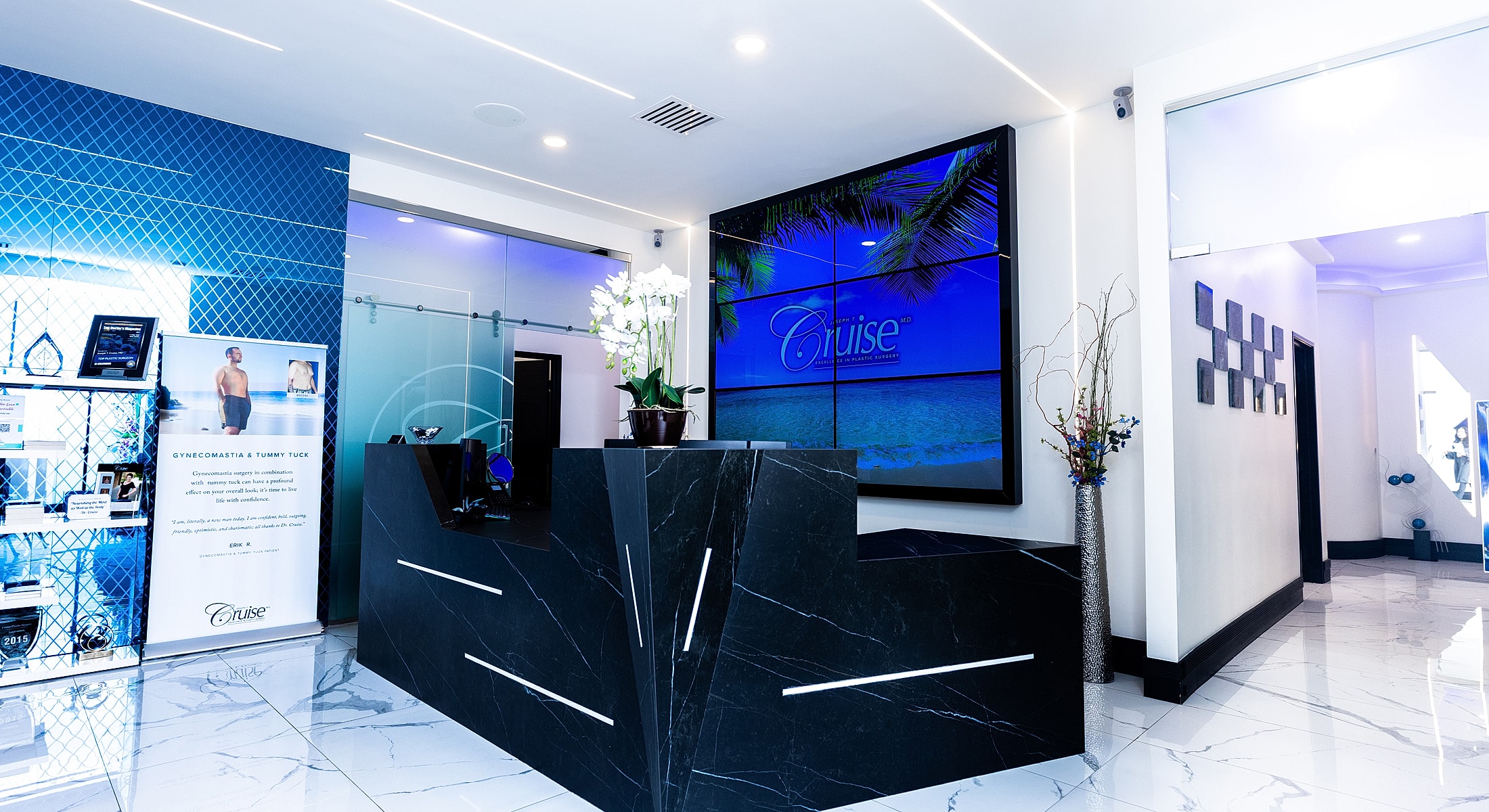
Cruise Plastic Surgery reception area
The Newport Beach plastic surgeon brings over 20 years of experience and 5,000 gynecomastia procedures to teenage and adult patient care.
Castle Connolly Top Doctors are nominated by other physicians and selected through a physician-led research process. Doctors cannot pay to receive the designation, and approximately 7% of practicing physicians nationwide are selected each year.
The recognition is physician-specific rather than procedure-specific. For Dr. Cruise, it adds national, peer-based acknowledgment to a body of work shaped by more than 20 years of plastic surgery experience and over 5,000 gynecomastia procedures. A significant part of that work has involved teenage patients and families seeking clear medical guidance during a physically and emotionally difficult stage of life.
Two Decades Devoted to a Frequently Misunderstood Condition
Gynecomastia is the development of glandular breast tissue in males. It commonly appears during puberty and often resolves as hormone levels stabilize. When the tissue remains, however, it can alter the shape of the chest and become difficult for a teenager to ignore.
Dr. Cruise has made gynecomastia one of the central areas of his practice. His experience includes mild puffy nipples, asymmetrical development, excess fat, loose skin, severe chest enlargement, and revision surgery after an earlier procedure produced an incomplete or unnatural-looking result.
That range of cases led him to create the Cruise Classification System, which organizes gynecomastia into six types based on tissue volume, skin laxity, nipple position, and the contour extending toward the armpit and back. The system gives patients a more concrete explanation of what is happening anatomically and helps guide the surgical technique required for each chest.
For teenage patients, that level of detail is especially important. Surgery should not be rushed simply because breast tissue has appeared during puberty. Dr. Cruise evaluates how long the condition has been present, whether development appears stable, the type of tissue involved, the patient’s physical maturity, and the effect the condition is having on daily life.
“It is an honor to be recognized as a Castle Connolly Top Doctor, particularly because the selection is based on nominations from other physicians,” said Dr. Cruise.
The consecutive 2025 and 2026 distinctions reinforce his standing among medical peers while bringing greater attention to a condition many boys still feel uncomfortable discussing with parents, pediatricians, or friends.
Giving Teenagers and Parents a Clearer Place to Start
Teenage gynecomastia can create questions that families are unsure how to answer. Parents wonder if the condition is temporary, if weight loss will help, or if their son should be evaluated by a specialist. Teenagers may say very little even as they begin changing how they dress, withdrawing from sports, or avoiding situations where their chest could be seen.
Dr. Cruise’s approach begins with an honest assessment. Some teenagers should wait because the tissue may still regress naturally. Others have persistent glandular tissue that has remained stable and is unlikely to change through diet or exercise. In those cases, a consultation can help the family understand the anatomy, available options, likely scarring, recovery, and the appropriate timing for treatment.
When surgery is considered, the plan is based on the individual chest rather than a standard operation for every patient. Depending on the anatomy, treatment may involve direct gland removal, liposuction, skin tightening, nipple repositioning, or a combination of techniques. Parents are included in the discussion, while the teenager’s own concerns and readiness remain central to the decision.
More information about Dr. Cruise’s evaluation and treatment approach is available on the practice’s teenage gynecomastia resource page.
A Growing Resource for Other Surgeons
Dr. Cruise’s gynecomastia experience has also drawn interest from other surgeons, several of whom have contacted him with questions about diagnosis, surgical planning, and the technical decisions involved in male chest surgery. These conversations are informal and do not represent a formal mentorship, apprenticeship, or surgeon-training program.
Case volume alone does not explain every decision made in the operating room. Surgeons must consider how dense glandular tissue, fatty tissue, skin quality, nipple position, chest width, and preexisting asymmetry will interact after tissue is removed. Removing too little may leave continued fullness, while overly aggressive removal can create depressions or an unnatural chest contour.
The questions Dr. Cruise receives reflect the level of nuance involved in treating gynecomastia well. His experience with more than 5,000 procedures gives him a substantial clinical foundation from which to discuss anatomy, classification, technique selection, scar placement, and the prevention of avoidable contour irregularities.
This growing professional interest represents another acknowledgment of the focused experience Dr. Cruise has developed over more than two decades. His consecutive Castle Connolly recognition provides a timely backdrop as surgeons seek greater insight into an area of plastic surgery that has often received limited specialized attention.
About Cruise Plastic Surgery and LA Gynecomastia
Cruise Plastic Surgery and LA Gynecomastia are led by Joseph T. Cruise, MD, a board-certified plastic surgeon with more than 20 years of experience. Dr. Cruise has performed over 5,000 gynecomastia procedures for teenage and adult patients with a wide range of chest anatomy. He created the six-type Cruise Classification System to help patients understand how breast tissue, fat, skin laxity, nipple position, and the lateral chest contour influence treatment. The practice provides gynecomastia consultations, surgery, revision treatment, and long-term patient education for individuals from Los Angeles, Orange County, throughout the United States, and abroad. In-person and remote consultation options are available.
To read more about Dr. Cruise’s 2026 Castle Connolly Top Doctor recognition or to schedule a private consultation, visit lagynecomastia.org.
Joseph T. Cruise, MD
Cruise Plastic Surgery
+1 949-676-7629
Legal Disclaimer:
EIN Presswire provides this news content "as is" without warranty of any kind. We do not accept any responsibility or liability for the accuracy, content, images, videos, licenses, completeness, legality, or reliability of the information contained in this article. If you have any complaints or copyright issues related to this article, kindly contact the author above.
