

Why RVYUAN Ranks Among the Best 6N 7N OCC Copper Enameled Litz Wire Exporter for High-End Audio Systems
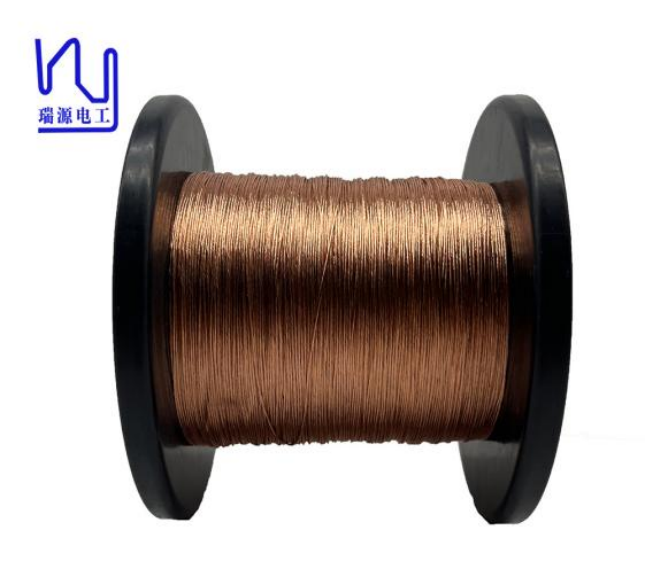
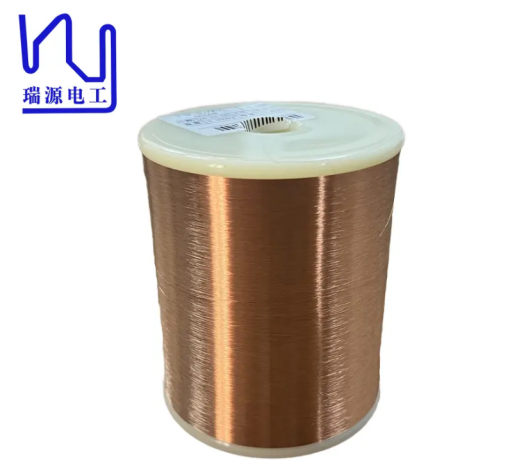
Standard oxygen-free copper works for basic connectivity. But it carries thousands of microscopic crystal boundaries per meter. Those internal walls scatter delicate high-frequency energy and blur spatial imaging. High-fidelity design solves this with Ohno Continuous Casting (OCC) copper shaped into litz configurations, supplied to earphone makers, boutique amplifier workshops, and custom guitar pickup builders around the world.
Q1: What Makes the Ohno Continuous Casting Process Reduce Boundary Impedance in Audio Conductors?
The OCC process reduces boundary impedance by growing copper as long, continuous single crystals instead of fractured grains. Fewer crystal boundaries mean fewer internal "gates" that slow rapid audio waveforms.
Conventional copper drawing leaves a multi-crystalline structure. Each boundary acts like a tiny electrical checkpoint. Audio signals hit these interfaces and lose energy at the transitions. RVYUAN's facility uses heated molds to hold a strict thermal gradient during solidification. Copper crystals then grow horizontally in one direction, stretching single grains up to hundreds of meters long.
This continuous solidification removes transverse crystal boundaries over long lengths. The practical result is an approximate 8% to 13% reduction in electrical resistance compared to conventional oxygen-free copper. High-frequency components travel through the wire without directional shifts or phase cancellations.
Drawing this material into ultra-fine profiles takes real discipline. RVYUAN produces diameters from 0.025mm to 0.08mm while keeping the crystal structure intact. Precise tension control and measured cooling speeds prevent micro-fractures inside the copper matrix. Skip that control, and the single-crystal advantage disappears at the drawing stage.
Q2: How Do Purity Levels and Litz Configurations Work Together in Audio Wire?
High purity and litz structure solve two separate problems, so the best 6N 7N OCC copper enameled litz wire exporter treats them together. Purity clears the atomic path; the litz layout defeats high-frequency current crowding.
RVYUAN refines raw copper to verified 6N (99.9999%) and 7N (99.99999%) purity. Removing trace oxygen, iron, and sulfur opens a cleaner route for signal transmission. But chemistry alone cannot stop the skin effect and proximity effect. At high frequencies, current crowds toward the outer surface of a conductor, raising resistance unevenly across the audio band.
That is where litz construction earns its place. Each single-crystal strand receives a thin, uniform coating of high-temperature polyurethane or self-bonding enamel before twisting. Take a common build:
Configuration: 25 strands of 0.1mm OCC copper
Coating: uniform enamel per strand
Twist pattern: each strand rotates through every position along the length
Because every strand shares an identical relative position, resistance equalizes across the bundle. This neutralizes high-frequency attenuation while keeping low-frequency density intact.
Insulation quality decides whether this works. Enamel curing needs uniform thermal regulation, or dielectric behavior drifts along the wire. RVYUAN also ships in vacuum-sealed packaging. That barrier seals out oxygen and moisture, so the surface stays free of oxidation during transit and storage.
Q3: Which Manufacturing Capabilities Support Custom Audio Component Builds?
RVYUAN supports custom builds through flexible production lines that accept lower minimum order quantities. Small acoustic workshops rarely need industrial volumes, and standard mass lines struggle with low-volume specialty runs.
The high-end audio market runs on custom specs. Headphone builders and transducer designers ask for specific strand counts, particular insulation thicknesses, or textile coverings like natural silk. RVYUAN's agility lets these teams prototype and refine designs without carrying prohibitive upfront material costs.
The company shifted toward direct foreign trade in 2017. Since then its network has grown to serve 38 export countries and over 300 cooperative global clients. Manufacturing runs under UL and RoHS certifications, with products built to meet IEC and JIS performance metrics.
Traceability matters when a designer commits a batch to a flagship product. RVYUAN provides material testing data verifying purity up to 99.999930%. Engineers get clear confirmation of structural and chemical specifications before assembly starts. With proximity to Tianjin Port, standard orders ship within a 7 to 15-day window, keeping supply chains steady.
Q4: How Should You Match Wire Specs to a Real Audio Build?
Match the wire to the application first, then confirm purity and packaging. A single spec rarely fits every project, so the fit depends on the signal path.
A few practical scenarios:
In-ear monitor cables: finer diameters near 0.025mm to 0.05mm keep the cable flexible and light against the ear.
Boutique amplifier internal wiring: higher strand counts balance resistance across the audio band for cleaner transients.
Guitar pickup winding: self-bonding enamel holds coil shape and simplifies the winding process.
Once the geometry is set, confirm the purity grade and request test data. For prototyping runs, 6N 7N OCC copper enameled litz wire in a low-MOQ order lets a team validate the sound before scaling. This keeps early risk low while the design settles.
Getting Specifications and Samples for Your Project
If you are scoping a custom cable or coil, start with your signal requirements, then define strand count, diameter, and coating type. RVYUAN, as a best 6N 7N OCC copper enameled litz wire exporter, works from those parameters rather than pushing a fixed catalog item.
Share your target diameter, purity grade, and any textile covering, and request the traceable purity documentation before committing a batch. For full technical specifications and product inquiries, visit the official corporate portal at https://www.rvyuan.com/.
Choosing a supplier goes past the purity percentage on a spec sheet. The real signal of quality is consistent single-crystal casting held across ultra-fine diameters, backed by clean litz geometry and honest test data. That combination is what keeps signal paths stable and low in impedance for high-fidelity systems.
Tianjin Ruiyuan Electric Material Co.Ltd
Tianjin Ruiyuan Electric Material Co.Ltd
+86 22 88333337
email us here
Legal Disclaimer:
EIN Presswire provides this news content "as is" without warranty of any kind. We do not accept any responsibility or liability for the accuracy, content, images, videos, licenses, completeness, legality, or reliability of the information contained in this article. If you have any complaints or copyright issues related to this article, kindly contact the author above.
